It’s mid afternoon and a beautiful day for a walk out to the end of the Santa Barbara Breakwater. When we get there we’re greeted with a pleasant surprise. With the tide at an extremely low level the sandspit is wide open making it extremely easy for us to walk all the way out to the end and almost within spitting distance of Stearns Wharf.
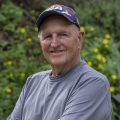
I’m with my wife Yvonne and our three precious grand nieces—Ava, Naomi and Hannah—and they are having the time of their lives. It’s one of those days when you realize how important living along the ocean’s edge is to us and how much it shapes the character of all of us.

The kids pose for a picture, then they’re off to explore: checking out the surfers, seeing how close they can get to one of the nearby shorebirds, splashing their way along the water’s edge; horseplay at its finest.
I’ve lived most of my life within a mile of the Pacific Ocean, growing up in El Segundo, going to college at UCSB then being lucky enough to get a teaching job at Dos Pueblos High School. My first board was a 9 feet, 6 inches long, a Mike Doyle special, my graduation present at the end of my 12th grade year, and one I kept close by my side for many years.
My mantra was: check the surf first then decide whether to go to class.
Later I traded those surf days for beach time, walks along any one of my favorites—Hendrys, Haskell’s, El Capitan and further north at Jalama and Point Sal. Rarely did I think of a hike in the hills though we’d head over to Red Rock now and then.

The value of sea and summit
Coming to terms with the Santa Ynez Mountains didn’t come naturally to me. Growing up in El Segundo we didn’t go on day hikes. Why would be anyway, when the beach was just a short bike ride away and the coastal promenade gave us access to miles of places to explore. Just me, a friend or two and my trusty Schwinn single speed.
Ironically, I think my first day hike was up the Ventana River on a camping trip to Big Sur in the late 1960s. A bit later I discovered a book by Dick Smith, the News-Press’ outdoor columnist and illustrator. I picked up a copy at the local Dunall’s, the area’s first war surplus and outdoor store. The title was “California’s Back Country: Mountains and Trails of Santa Barbara Country.”
I couldn’t put it down.
Who could imagine all the incredible places in the mountains beyond the Santa Ynez crest that I had no clue existed? Later I had the opportunity to thank him for introducing me to what I would later learn was simply called “the back country.”
Start of a relationship
It was like a bolt of lightning, a sudden awareness of how little I knew about the Santa Barbara back country or even dreamed existed. The pictures of the prehistoric-looking sandstone formations, the wide-open meadows known as Pine Corral Potrero and nearby, the deep and mysterious Lion Canyon—all places I knew I would explore one day.
It was quite a few years later before I was able to visit these places, but the immediate result was that I began to spend a lot more time in the Santa Ynez Mountains, often off trail. It was easy to do then given the 1964 Coyote Fire had opened up most of the Santa Barbara side of them.
I also began to appreciate the value of both “Sea and Summit,” and that without one or the other, Santa Barbara way of life is just not the same. Mostly we’d head to the places where we could follow the trails uphill and the canyon bottoms back down.
In the 1960s, there were no guidebooks to the front country trails. We used the Goleta, Santa Barbara and Carp topo maps to scope out the canyons and our imaginations as our guide to places like Tin Can Meadows in Rattlesnake Canyon, the sandstone pools between the first and second crossing in Cold Spring Canyon, and most exciting of all, Seven Falls.
Over time I began to understand that the mountains and the back country would be just as important and essential to me as the ocean has been for most of my earlier life.

View from the Breakwater
Quiet, motionless, more the backdrop that is just “there,” often shrouded in a hazy softness, doing its job without much notice: its canyons providing the needed water for groundwater recharge; the steep hillsides serving as a barrier to inland heat and maintain our marine layer; the light-grey chaparral cover moderating the ground surface temperatures; all those hidden places that I was beginning to explore.

On a clear day they provide such an inviting view—and a much clearer sense of the geologic layers that make up the Santa Ynez Mountains.
It’s a dramatic view—a classic example of the geologic strata that make up the Santa Ynez Range—like a series of flat iron triangular layers, lying one on the top of another. Together they form perhaps the most impressive backdrop anywhere in Southern California.
Getting to the top
While the kids continue to play I’m dreaming about any number of the off-the-trail adventures I’ve done years with my teacher-friend Bob Hardy. For years we’d head out every Wednesday morning for a hike—on or off trail, rain or shine, foggy or not—looking for an adventure most anywhere we could get in an hour’s drive.
One of our adventures took us to a spot I had earlier named the “Rock Garden.” Composed of incredible house-sized boulders—it had much of the character of the Playground but at a much larger scale.

While it’s possible to access the Rock Garden from Camino Cielo, the most adventurous way is via the Tunnel Trail to the connector trail leading down into Rattlesnake Canyon, then looking for a bit of an opening in the chaparral that leads straight up to the Rock Garden.
The climbing begins in light chaparral and is steep enough to use the lower limbs on the chaparral for support. We’re both wearing shorts and wondering if that was a good idea but then I almost never wear long pants.
Then the real climbing begins. The route at this point consists basically of third-class rock climbing requiring use of both hands and feet. We stop often to check out the views. Hardy is leading while I stay back shamelessly taking the photos and letting him work out the route finding.

Finally we reach a point where the world seems to open up to us. The clouds begin to clear, opening up views of Santa Cruz Island in the distance and below us across Mission Canyon to the flatiron ridge lines leading to Arlington and Cathedral peaks.
“We’ve got to explore those,” Hardy whispers to me.

We continue on and thankfully the vegetation opens up a bit but there are still plenty of bouldering left for us. The high point is in sight as is the promise of blue skies on the horizon.

Once we’ve reached the top and had lunch it’s back down the way we’ve come. The descent is a bit trickier than the climb up but we’ve also got the views out over Santa Barbara in front of us and with a bit of care we make it down to Tunnel Trail. It’s a half hour down to our car and I think we were both grinning the whole way.

But in the back of our minds there was that view across the canyon to the ridgeline leading up to Arlington Peak and our silent commitment we would climb that one day.