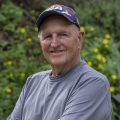
Sometimes the things that change your life in meaningful ways come in unexpected ways. One of the most consequential was the moment back in the early 1970s when my principal at Dos Pueblos High School, Denny Baylor, OK’d an outdoor education program I’d proposed for students interested in exploring our natural environment in more detail.
It was a proposal gifted to me by a spring trip to the Grand Canyon that left me with the sense that real education lay not in the classroom but outdoors, at least for many of us, and a program like what I was looking to implement was just as needed as seat-time in a classroom.
Along with dozens of students each year that joined my class, roughly titled “Wilderness Environment,” we hiked, backpacked, biked and even rock-climbed everywhere we could. Over time we explored almost every part of the county, including the San Rafael Wilderness—and even ventured as far as Yosemite during the longer vacation times.

One particular trip that was especially meaningful was a five-day trip on what is known as the Sisquoc Loop, 45 miles of absolute joy—first up Manzana Creek then over the Hurricane Deck to the Sisquoc River, down it to its junctions with the Manzana, and up it to our cars.
A day or two later one of those on the trip asked me, “What would you think of writing a book with me on our adventures in the backcountry?” By that he meant all of our several dozen we’d been on that year.
Marty Hiester was a tall, lanky tow-headed blonde who could hike forever with barely a sweat. Though not quite yet a Dos Pueblos graduate he was someone I knew instinctually would be a perfect companion for the project. Over the next month Marty walked every one of the trails in the San Rafael Wilderness and brought back copious notes. I did the background research and the writing and by Fall 1974, thanks to a grant from Granite Stairway Mountaineering (long gone now), our book, “Trails of the San Rafael Wilderness,” was in print.
Beginning of a second love
I would have to say that it was almost preordained that spending my time outdoors as much as possible would lead to the desire to share it with the kids I was teaching as well. Looking back I think that innate need to get outdoors sprung from my early childhood years and were critical in forming the person I later became.

My early years were spent in Ohio in a small suburb of Cincinnati called Hartwell. But weekends were spent at my grandfather’s farm: 160 acres of prime agriculture land just a half hour north of us. Along with the typically white, two-story farmhouse were the alfalfa fields, acres of corn rows, the barn where the milk cows were housed and the nearby hen house and family gardens.
If I had to characterize the lifestyle it was much like the pioneers before them lived with the exception of having electricity and TV reception. The stove was wood-fired, the outhouse was just that, outside, and it was a 50-yard walk out to the pump, fed by an underground well. It wasn’t until 1963 that my grandparents had indoor plumbing.

I was born in a small rural town in northern Idaho where my Dad was stationed far away from the farm he grew up on. Seems like a strange place for a Naval base but Sand Point and the nearby Lake Pend Oreille were huge and apparently large enough to train for duty in the South Pacific. I arrived in my mom’s belly a month before and was on my way back to Ohio not too long after my Dad headed off for duty in World War II.
By 3rd grade I spent weekends on the Farm milking the cows, doing my best to collect the eggs without getting pecked and after the crops had been harvested, running the tractor on what was known as “the back forty.” And, of course, exploring the countryside at every free moment.
Seven Swamps
One of my favorite memories was of the afternoons spent with my dad at Seven Swamps, an almost impenetrable set of meandering creeks and overgrown vegetation. We were there to hunt frogs and the ones here were some of the largest I’d ever seen. And the loudest. We were both outfitted with .22 rifles, a great honor for me as it was my first time out after hours of patient tutoring and practice behind the barn. I wasn’t a crack shot but I couldn’t wait to see how things went. We came back with a dozen or so frogs and I was beaming with pride. That is, till my dad informed me I’d be the one to gut and skin them.

Not too long after that trip we left the farm behind and headed for California. It wouldn’t be long before I’d find places to explore there. Most of them were in what I’d call “bicycle range,” which for a kid ranged from five-to-10 miles. Not too far from our small El Segundo home was another set of swamps called Bollona Creek. We’d pedal across Imperial Boulevard and flow Lincoln Avenue to one set of rotted piers or another, get out our meager fishing gear—which consisted of a wooden handline spool we’d carry in a pocket, a small bag of Velveeta cheese for bait and see what we could hook.
Little did we know this set of what we thought of as swamps was actually one of the largest and most ecologically rich coastal wetland systems in Southern California. All that mattered to us was that it was our perfect little playground.
Rediscovering the need to explore
For several years my focus was on my teaching career in the Social Studies Department and occasionally a surfing trip to Rincon, the Campus Poles or El Capitan point break. Or I’d head out to Red Rock with friends on the weekend.
The turning point was a spring break vacation with my brother Don. We headed east following Route 66 through Barstow, Needles and Kingman, our destination the Grand Canyon. As I’m sure it is for others, the beauty from the canyon’s edge is both intense and awe-inspiring, but at the same time I was left with a disconnect. That need to touch and feel and emotionalize is such an important thing for me and instinctively seeing it from above wasn’t enough.

A day later we were able to do exactly that at a river access point named Lee’s Ferry, where those heading downstream for a river trip put their rafts in. At the time there was a restaurant at the edge of the river and small boats for rent. We camped nearby for the night. We had breakfast, checked out the boat dock, and made an impromptu decision to rent one. Upstream was our only option.
The trip upstream was uneventful. The current was slow and the motor powerful enough to maintain steady pace. It’s 15 river miles up to the Glen Canyon Dam and we motored perhaps two-thirds of that before turning around. Almost immediately pur persppectives changed.
Without the need for the motor and oars to help guide us, the trip back down was in almost perfect silence. The walls a thousand feet or more in height on either side, the narrow sky view shaped somewhat like that of a canoe. We soaked in the quiet, the sound of the crows, their ca-caws and the woosh of their wings leaving us breathless. The feeling was transformative and for the moment we were in our own little world.
I knew then that I would run this river some day. In my own raft, under my own power. The need to explore more of the canyon was overwhelming for me. I didn’t know then how I would accomplish that. I just knew I would.

I also marveled at what it might be like to teach geology or geography or history or so many other subjects from the context of the river and the canyon. Or so many other places through firsthand experiences.
When things seem to fall in place
I came back from that trip a changed person and with a sense that I could be much more effective as a teacher if what we did in the classroom was complimented with validation in an outdoor setting. As it turned out, I came back at just the right time, in the right place and with the right person sitting behind the principal’s desk.
Looking back it was the beginning of so much more: my outdoor classroom, the opportunity to explore almost every corner of the Santa Barbara front and backcountry, and the start of a career as an author—first of guide books, and in 1990 my first major publication, “Santa Barbara Wildfires.”
In early July 1990 as the ashes died down from the catastrophic Painted Cave fire it became clear to me that there needed to be a better understanding of the impact of wildfires on the Santa Barbara community and that I might be in the perfect position to chronicle the history of wildfires in the county.
My book publisher, Bill McNally offered to connect me with Sue DeLapa at Santa Barbara News-Press to see if she would open up the paper’s morgue—a humongous collection of news clippings from the News-Press and other sources dating back to the 1940s.
This wasn’t to be just a project for me but a personal necessity. At the time of the Painted Cave Fire I lived at the top of San Marcos Pass, a half mile east on Camino Cielo. As I got home from a camping trip the fire was making an uphill run toward the Trout Club. If it crossed over Highway 154, Marc and Julie Kummel’s house, where I rented the downstairs, would likely be toast.
We got lucky when others didn’t, thanks to the efforts of firefighters from all over the state and especially the valiant efforts of those piloting the aerial bombers who kept the flames from crossing Highway 154 near San Marcos Pass.

For the next three months , with the blessing and wholehearted support of DeLapa and the News-Press I pored through hundreds of clippings relating to wildfire, sat for hours at my trusty Mac computer and began to compose what would become another major chapter in my life: that of a wildland fire author and news reporter, first for the Santa Barbara News-Press and in later years the Santa Barbara Independent and most recently, Noozhawk.
I’ve covered every major wildfire in the county since the Zaca Fire in 2007 and am now in the process of building a website devoted to these and other California wildfires. Beginning with this story I’m back working with the News-Press both as an outdoor and wildfire-related columnist while also maintaining ties with my good friends at Noozhawk.
It began a half century ago with a trip on the Colorado River. A quick motor-powered ride upriver and a float back down have made all the difference.
411
Author’s Note: This is the beginning of a partnership with the Santa Barbara News-Press designed to provide readers with an assortment of stories about the adventures I’ve had in both the Santa Barbara outdoors and throughout places in the west that have both shaped my character and served as a North Star of sorts. Much of my youth was a blessed one. My early life was spent practically within spitting distance of my grandparents’ farm.
What this gave me was the space to roam, to explore, to do things no kid here would have the opportunity to do today. When we came to California there was the Pacific Ocean less than a mile away and the great marshlands of Bollona Creek to explore and none of the modern day worries moms and dads now have.
Room to roam … there’s so little of that these days and never has it been so needed. Space to find yourself. Get lost and find your way home. Get back with a big grin on your face and a readiness for more.
We owe it to our kids to encourage time spent outdoors and hopefully what I write will encourage more adventures in the places I have been lucky to explore.