


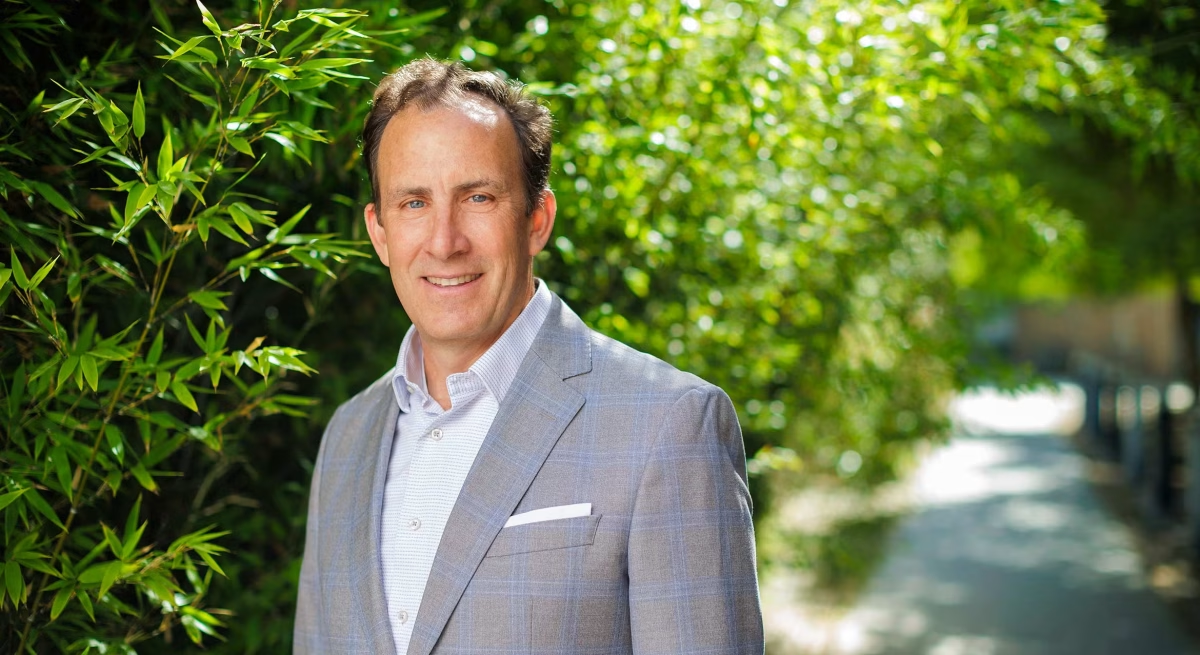
If you want to change the world, you need to work with human behavior, not against it. Professor Christopher Costello came to that realization early in his career, and it’s a lesson he tries to pass on to his students, colleagues and collaborators.
Over the years, Costello has applied this insight to problems from climate change to resource extraction, establishing UC Santa Barbara’s Environmental Markets Lab (emLab) to translate research and scholarship into actions and interventions throughout the world.
Costello was just named a Fellow of the Association of Environmental and Resource Economists (AERE), the highest honor bestowed in the field of environmental and resource economics. Fellows demonstrate “sustained impact through scholarship, leadership, mentoring and service,” the association’s announcement said.
AERE cited Costello for his research spanning fisheries policy, ocean governance and regulatory design, including his influential 2008 paper in Science on catch shares and fisheries collapse. Beyond his research, he has shaped the field through his work as chief economist at the Environmental Defense Fund, his involvement in the Latin American Fisheries Fellowship and his mentorship of more than 30 Ph.D. students and postdocs.
Costello was humbled by the recognition; he hadn’t even known that he was nominated. “It was a total surprise,” he said.
“Professor Costello’s research is critically important to combatting climate change and rapid environmental degradation,” said UCSB Chancellor Dennis Assanis. “Professor Costello understands how to create economic frameworks that align human behavior with the sustainable practices we so urgently need. His dynamic scholarship reflects UC Santa Barbara’s interdisciplinary culture and foundational commitment to the environment, and we are deeply proud that he has received this prestigious honor.”
Costello’s work lies at the intersection between economics and the environment. He considers how we manage natural resources and how to address issues like climate change, biodiversity loss and overfishing.
This requires understanding the sources of these problems, which are usually what economists call market failures. These often happen when an activity’s true costs aren’t properly reflected in the market itself. And brute force solutions won’t fix these failures, they require properly aligning people’s interests and incentives so that their behavior naturally changes. “I’ve built a research agenda around how to internalize those external costs,” said Costello, a distinguished professor at the Bren School of Environmental Science & Management.
This approach fascinated Costello from the earliest moments in his budding career. He studied political economy as an undergraduate, a field devoted to understanding incentives and vested interests. “What really grabbed me was this idea that you could change people’s incentives, and therefore change outcomes,” he recalled.
Read the full story at https://news.ucsb.edu/2026/022711/christopher-costello-recognized-his-pioneering-work-environmental-markets.